Custom Brass Hot-Stamping Dies vs Steel Pad-Printing Plates for Makeup Brush Logos
How makeup brush handles get branded: custom brass hot-stamping dies, mirror-reversed engraving, steel etched pad-printing plates, tooling costs and how to choose for your private label program.
Branding a Makeup Brush Handle Is a Tooling Decision
Every private label makeup brush eventually reaches the same question: how does your logo get onto the handle? At Malena, the two workhorse methods are hot stamping with custom brass dies and pad printing with etched steel plates. Both look premium when done right, but they differ in tooling cost, flexibility and the surfaces they suit.
1. Custom Brass Hot-Stamping Dies (Copper Dies)
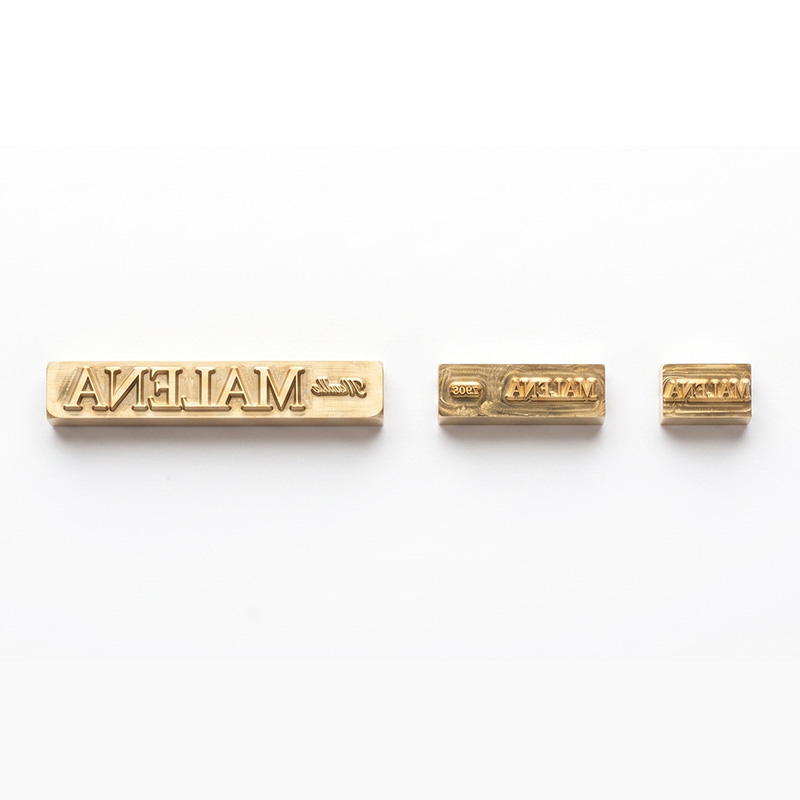
A hot-stamping die is a solid brass block with the brand mark machined in raised relief — and engraved mirror-reversed. The reversal matters: once the heated die presses foil into the handle, the transferred impression reads the correct way round.
Why brass? Brass conducts heat quickly and evenly, holds fine serif detail, and survives tens of thousands of cycles without the edges softening.
Typical die set
| Die size | Typical use |
|---|---|
| Large | Full brand wordmark on face/kabuki handles |
| Medium | Standard eye and face brush handles |
| Small | Slim eyeliner and detail brush handles, code numbers (e.g. 3005) |
A die is mounted on a hot-stamping machine or heat-press. Under controlled temperature, dwell time and pressure, metallic foil (gold, rose gold, silver, matte black, holographic) is fused into the handle surface.
Best for
- Lacquered wood handles
- Painted or anodized aluminium handles
- Any brief that calls for a genuine metallic, slightly debossed luxury finish
The cost catch
One die serves one logo at one size on one handle diameter. If your collection has five handle sizes, you generally open five dies. Curved handles also need the die radius matched to the handle, or the impression prints strong in the middle and light at the edges. Tooling cost scales with the number of SKUs.
2. Etched Steel Pad-Printing Plates (Cliché Plates)
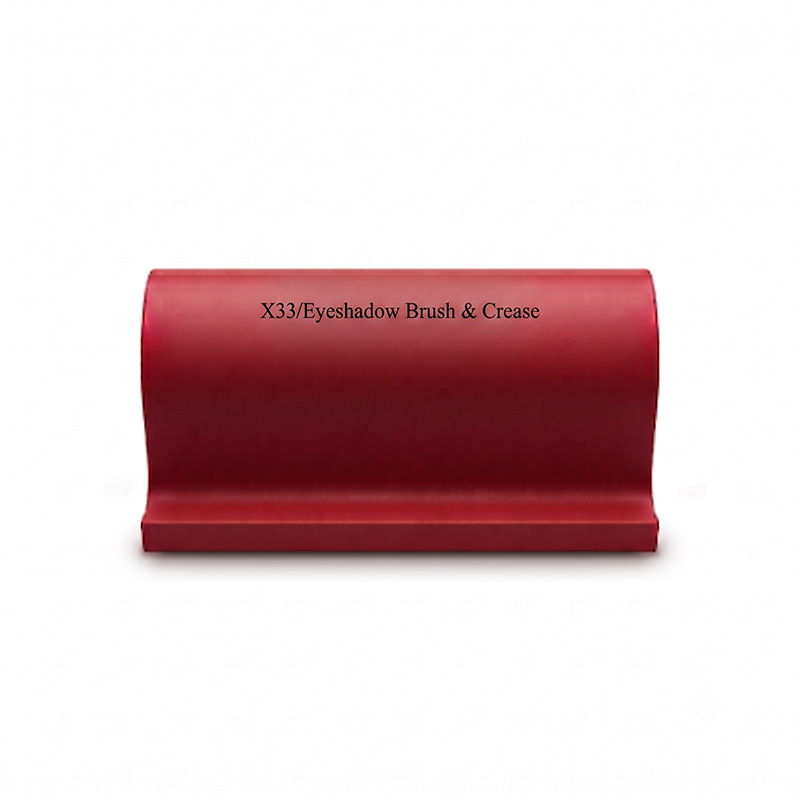
The alternative is pad printing, which uses a flat steel plate (cliché) instead of a raised die.
Material and surface finish
The plate is made from hardened, wear-resistant tool steel. Its face is highly polished and precision-ground to an extremely flat surface, so the doctor blade sweeps across cleanly and leaves no residual ink outside the image area.
Etching process
The artwork is recessed into the plate by precision chemical etching or laser engraving. Groove depth is uniform and the edges are crisp, so even hairline strokes and small brush-name text reproduce cleanly.
Printing principle
Pad printing works with high-adhesion inks:
- Ink floods the engraved recesses.
- The doctor blade wipes the surface flat, leaving ink only inside the grooves.
- A silicone transfer pad picks the image up and rolls it onto the handle — wood, plastic or metal — conforming to the curve.
Because the pad is soft, pad printing handles tapered and curved handles far more forgivingly than a rigid die.
The cost advantage
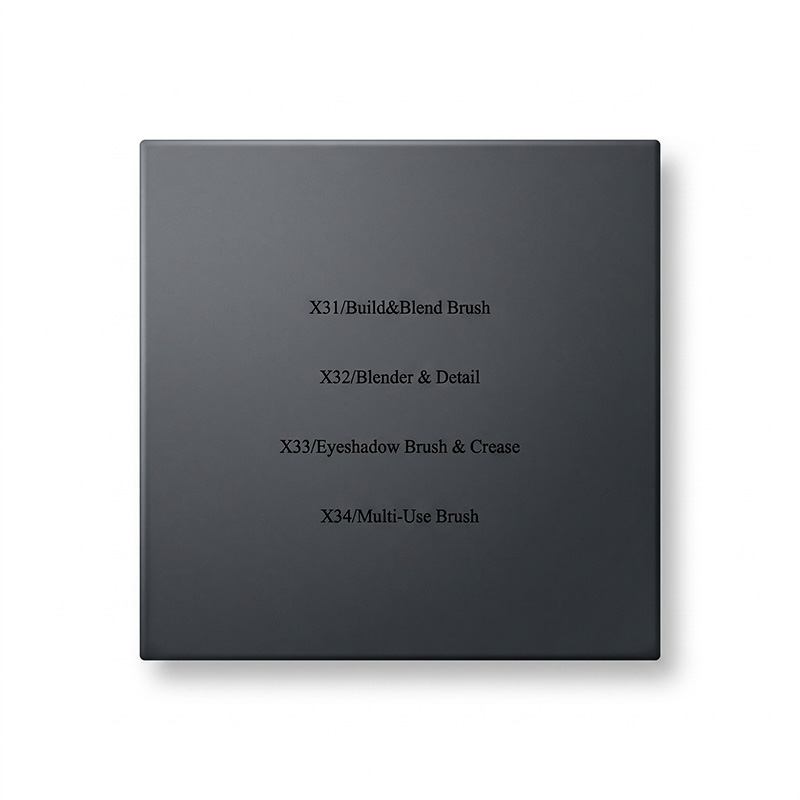
A single steel plate can carry many images at once — for example four brush names and codes laid out together:
- X31 / Build & Blend Brush
- X32 / Blender & Detail
- X33 / Eyeshadow Brush & Crease
- X34 / Multi-Use Brush
One plate, one tooling charge, an entire set of handle markings. For a multi-SKU collection this is dramatically cheaper than opening a separate brass die per size — subject only to how much artwork you need to fit on the plate.
3. Hot Stamping vs Pad Printing at a Glance
| Factor | Brass hot-stamping die | Etched steel pad-printing plate |
|---|---|---|
| Tooling | One die per logo size / handle | One plate can hold many logos and SKUs |
| Tooling cost | Higher, scales with SKU count | Lower per SKU |
| Finish | Metallic foil, slight deboss, luxury feel | Flat ink, matte or gloss, full colour possible |
| Colours | One foil per pass | Multiple colours via multiple passes |
| Curved handles | Needs radius-matched die | Silicone pad conforms easily |
| Small text | Good | Excellent, down to hairline strokes |
| Best surfaces | Lacquered wood, painted aluminium | Wood, plastic, metal, coated ferrules |
4. How We Advise Brands to Choose
- Luxury capsule, few SKUs, gold or rose gold branding → brass hot-stamping dies. The tactile deboss and true metallic foil justify the tooling.
- Full collection, many handle sizes, brush names printed individually → etched steel pad-printing plates. One plate covers the range.
- Hybrid → hot-stamp the brand wordmark, pad-print the brush code and name. Common on professional-grade sets.
5. What We Need From You to Open Tooling
- Vector artwork (AI, EPS or PDF with outlined fonts).
- Final logo print size in millimetres.
- Handle diameter and taper at the print position.
- Handle material and finish (matte lacquer, gloss lacquer, soft touch, anodized).
- Foil or ink colour reference (Pantone where possible).
With that, we produce a tooling drawing, cut the die or etch the plate, and send stamped or printed samples for approval before mass production.
Talk to Our Engineers
Malena has produced custom brush branding for global beauty brands for over 23 years. Send us your logo and handle spec and we will recommend the most cost-effective marking method for your SKU count — and quote the tooling honestly.
Need a tailored quote?
23+ years of OEM experience since 2003, MOQ from 500, free 3D mockup within 24 hours.
Talk to our team